LifeSmarts Mindsets & Skillsets:
Learning for Life Beyond the Workplace
Do the Work, Own Your Impact, and Lead by Everyday Inspiring Example
LIMITED WORKPLACE LEADERSHIP TEAM LEARNING OPTION
When an Executive Order by the 47th President of the United States forbade the teaching of Diversity, Equity, and Inclusion in governmental entities, many corporations willingly chose to follow suit. This adversely impacted workplace Learning and Development educators like myself whose passion was about facilitating the creation of a workplace culture of humanity and harmony with strong ethical principles and a dedication to unbreakable integrity and transparent unifying leadership.
Both internal and external L&D training programs not only faced an immediate loss of jobs and educator income, more importantly, it left organizations with a gaping hole in how to create a culture of overall cohesion, collaboration, and cooperation.
When I obtained a B.A. in Organizational Leadership from Arizona (ASU), my areas of focus were becoming adept at teaching about transcending divisive biases, fostering ethically intelligent leadership, cutting through dangerous groupthink, and how not to lead. I obtained Leadership Professional in Ethics and Compliance (LPEC) certification from the Ethics and Compliance Initiative (ECI), and Transformative Conflict Mediation certification from The Institute for the Study of Conflict Transformation (ISCT) to advance my knowledge in these areas.
In an ASU class about Business Ethics, I was introduced to the teachings of German philosopher Immanuel Kant (1724 - 1804), whose work in epistemology (the theory of knowledge), ethics, and aesthetics greatly influenced all areas of philosophical perspectives. At the time I was teaching mindfulness as a life skill to corporate employees, and Kant's core teachings were complimentary to my own philosophical and spiritual studies that began at a young age.
Kant's primary rule for ethical and humane behavior was called The Categorical Imperative. It states that you should only act on rules (maxims) that you would want to become universal laws for everyone. If an action cannot apply to all people universally, it is wrong. He believed you must always treat humanity (fellow humans as well as yourself) as valuable beings with their own agency, needs, and goals, and never as a mere tool or means to an end. True moral actions must be extended out of a sense of duty and good will, not out of personal desire, fear, or the hope of a reward. Character matters and must be treated with reverence and trust.
For a simple breakdown of Kant's Philosophical perspectives, this is a good, simple video; however, consider this an appetizer - and leave plenty of room for a robust, multi-course meal. Kant's work can appear paradoxical and intellectually challenging at first, but once you get the whole picture of where he's coming from, it makes logical sense. It's also brilliant if you want to feel more in control and not at the whims of a powerful person or a disembodied entity that you can use as a scapegoat. That of course, requires taking mature responsibility for the impacts of your thoughts, choices, actions, and behaviors.
When teaching the originally-defined DEI framework became prohibited, I returned to Kant's wisdom to re-imagine a way to provide something similar in both spirit and form, and distilling it into three components that can help elevate the example we lead by, no matter who or where we are. It came into form naturally, integrating three inter-dependent transferrable and teachable mindsets and skillsets that can be taught both in the workplace and outside of it:
Dignity, Ethics, and Integrity
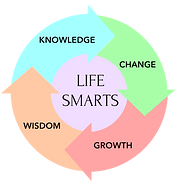
Bringing people together (regardless of where they are) and concurrently uplifting and challenging them to become the highest versions of themselves in service to collective humanity and the planet we all call Home is a foundational aspect of the systems-informed Everyday Leadership Change, Growth, Wisdom and Knowledge education I bring to those who are innately driven to lead by inspiring example. Playing Big, not small.
If you struggle with ethical decision-making and conflicts, and fear you won't or even can't make the proper moral choice in both your personal and professional life, this program will demonstrate that with a bit of guidance from Kant's perspective, you can become better equipped to make wise choices, and neither compromise your integrity or live with the bane of self-serving, trust-breaking hypocrisy.
Your self-talk will shift from justifying what you know is wrong, making lame excuses, and reactively blaming others - and lead by impeccable, honest, humble, strong, courageous and accountable example that can inspire others to do the same.
The ONLY online, interactive learning option for Workplace Leadership Teams I now offer is:

I no longer work with massive multi-national corporations because sustainable growth and change is simply not attainable at scale due to multiple circumstances and mechanisms in play. I refuse to work with any organization (regardless of size) that does not support democracy, engages in hypocrisy, uses fear-based command and control tactics, pressures employees to compromise their integrity, and/or treats any employee with dismissiveness or disrespect.
I intentionally do not list the corporations and institutions I've led trainings for:
1) They're not you. Your needs are unique. I do not offer cookie-cutter learning programs.
2) They often are interested in offering trainings focused on improving their bottom line and not offer transferrable and sustainable Learning and Development programs that bring lifelong learning value to each attendee's current and future professional and personal life. Almost every "At Work" type of training I've led for companies fails to acknowledge and encompass employees' whole Work+Life needs. Frankly this is a waste of the wisdom that is gained from all of our "not during work" learning experiences and creative solutions to problems.
3) I've led trainings for organizations I've loved and for ones I've lost respect for. Name-dropping who any of them are is unimportant, and my ego doesn't need some implied boost in credibility or judgment based upon your value system.
INTERESTED? HERE'S THE THING:
Re-Imagining DEI: Dignity, Ethics and Integrity contains everyday leadership lessons for those who want to Do the Work required to play Big in Life (not small) in ALL areas of their lives, not just at their job. We all have multiple spheres of influence and “at work” isn’t more important than any other one. I combine Self-Communication, Interpersonal Communication, and Communicating During Conflicts with a highly engaged, integrated, interdependent approach. I learn from every student that participates.
Growth and change can be scary and messy at best, but I frame it as an adventure, an Indiana Jones-like inner archeological dig wherein you honestly and bravely own and toss out your junk, polish hidden gems, and face your biggest fears. No false promise “one and done” time wasters that can’t move the needle, no “edutainment” or games, no chasing “smile sheet” enjoyment reviews.
An entitled, instant gratification attitude that expects results in short time windows (aka the persistent yet debunked myths of "six weeks to mastery" or "weekend intensive enlightenment") is a dead end.
When false promises made by the presenter don't occur, blame is placed a) the person(s) delivering the program;
b) on the subject matter "not working"; and/or c) it's the participants' fault ...
and learning programs quickly get shelved when budgets determine the risks outweigh perceived benefits based on false promises and fractured trust.
It's a losing proposition.
What happens after the formal learning program phase is completed is where its lasting value and impacts are determined.
-If your L&D budget can't include this vital component, I frankly won't work with you.
EVERY attendee must commit to bringing what they've learned within every aspect of their job and
transparently champion it throughout the organization.
If a learning program doesn’t continuously challenge you it won’t continuously change you ... and yet avoiding either is what anyone who wants to stay stuck in comfort zones, a worn-out status quo, and "digging in your heels" sheer stubborn laziness does.
IF THIS RESONATES WITH YOUR ORGANIZATION'S PERSPECTIVE AND WORKPLACE EDUCATIONAL NEEDS,